Derwent Valley AAP has made it possible for four schools in the Derwent Valley to work towards gaining their Green Flag Eco-Schools Award with support from OASES. This award enables schools to become more eco-friendly, whilst teaching the pupils about some of the most important environmental issues we are facing today.
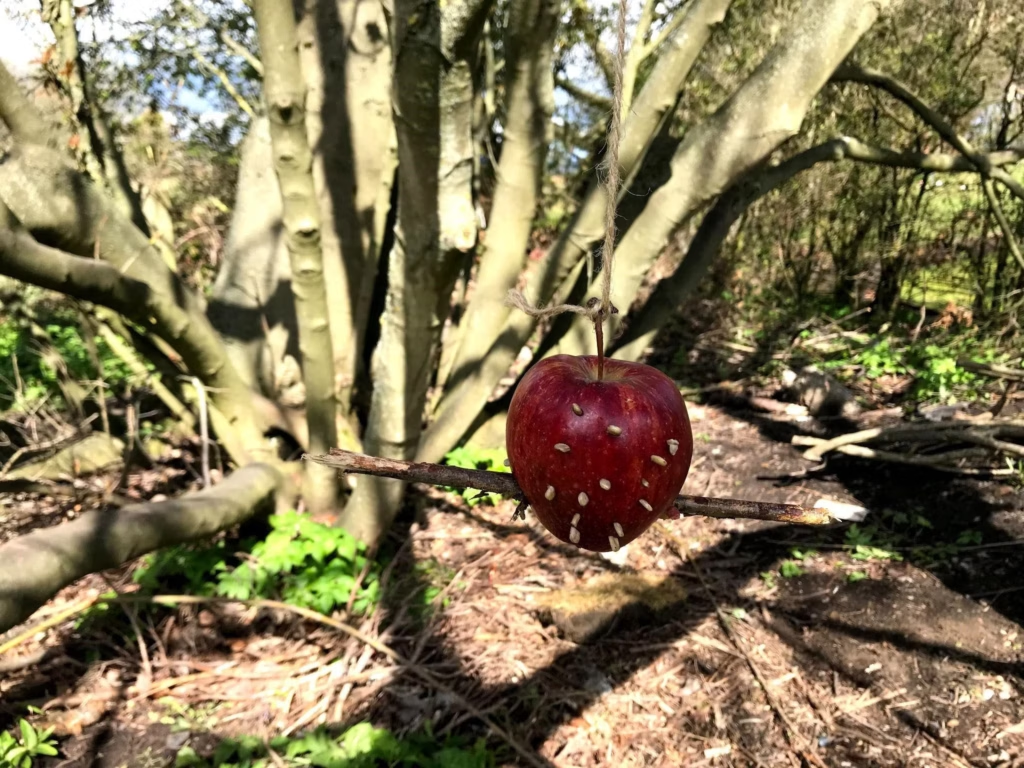
At the start of the project, Benfieldside Primary School eco group undertook an environmental review of the school and used their findings to make an action plan. They decided to focus on the Eco-Schools topics of biodiversity, energy, water and recycling. The photos show the bug hotels and bird boxes they made and put up in the wildlife garden. They also created pine cone bird feeders and planted pollinator-friendly bulbs, which were teaming with wildlife when we checked in on them in Spring.
They learned all about saving energy, and have appointed energy monitors in classrooms and for the ICT suite. They also put ‘turn me off’ stickers on some of the switches that don’t get turned off as much as they should. They also learned why it was important to save water and each pledged to save water. The caretaker was also asked to fix a leaky tap in the staffroom. The Eco Group created a much needed paper recycling system in all of the classrooms. They purchased recycling bins and did a mini presentation to all of the classes about what could go into them. We had planned to go into each classroom weekly and weigh all of the recycled paper on a regular basis but sadly that idea could not be realised because of COVID and avoiding bubble-mixing.
Finally, they delivered a virtual assembly to the rest of the school to let them know what they had been up to and ask for their help to save energy and water! Moorside Primary School Eco Group worked on their Eco Code and delivered an assembly explaining all of the parts of the eco code to the rest of the school. The eco group also worked through the school’s environmental review and made an action plan for their school.
OASES worked with the whole school, working with each class throughout the day to deliver 3 different sessions on the following topics: recycling, energy saving and climate change. The recycling day was delivered pre-COVID, and they did everything from playing ‘recycling snakes and ladders’ to making recycling superhero masks. KS2 classes were all surprised by some of the things that we can make from recycled products (i.e. school jumpers from plastic bottles, pencils from recycled paper money etc). The session on energy saving was delivered virtually due to COVID, so we delivered a video presentation and then set each class off with a task before coming together an hour later to show what they had achieved.
The Year 3/4s were tasked with creating stickers for light switches and devices reminding people to turn them off, and the Year 5/6s were tasked with planning a no electricity day. A similar format Climate Change session took place in May, where children of all ages in the school were challenged to learn about climate change and create posters, presentations and switch off devices across the school. The school was also provided with a virtual staff meeting which taught the teachers about the environmental issues we have been tackling, helping them to weave the topics into the curriculum, which helped them both during the project and will help them to continue to deliver the Eco Schools Award in school in the future.
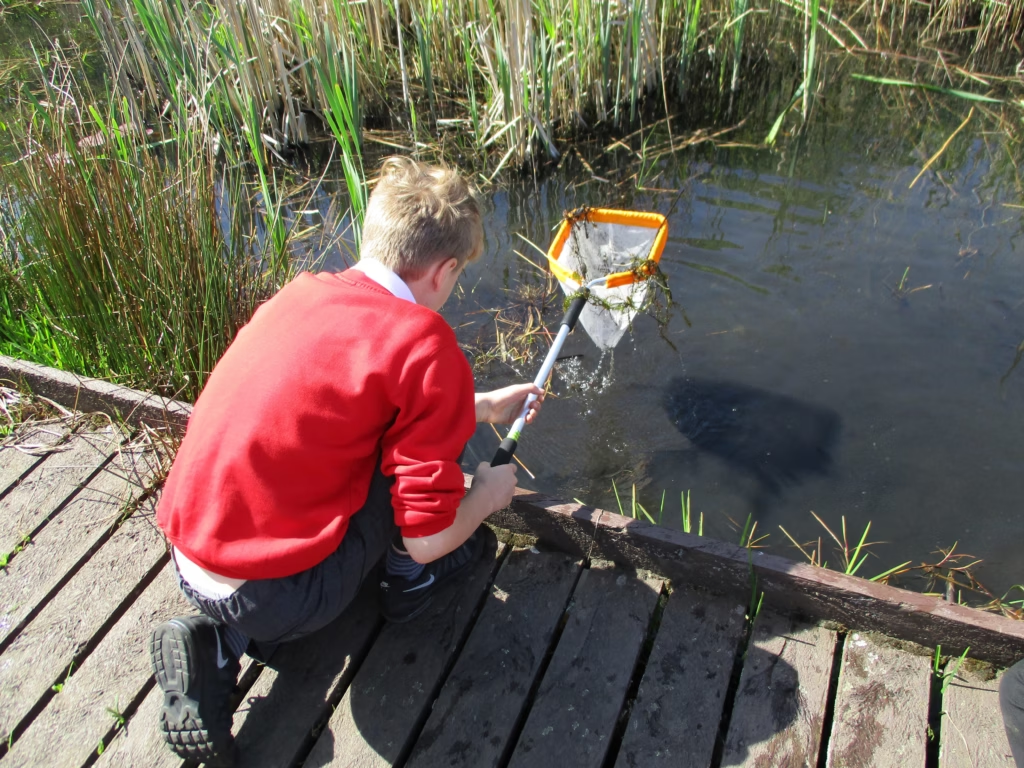
Delves Lane chose to work on the Biodiversity, Waste and Transport topics. Year 5 classes learnt about why biodiversity is important. They have a big school field and they felt that they could do more to attract more wildlife to visit and live in their school grounds. Each class carried out a survey in the school grounds, one focusing on birds and mammals, the other focusing on insects. They then created bird feeders to feed and attract a greater diversity of birds and planted pollinator friendly plants to attract more pollinators, which they know are in decline. Despite the unexpected flurry of snow in May, which made the ground harder to dig, the children did a fantastic job planting and the parents at pick-up time commented how nice it was to see more colour in the school grounds.
One Year 2 class learnt about our waste and what happens to it when we throw it away. They discussed where litter goes and what happens to it. The children were shocked to discover how litter and waste can impact wildlife and the environment and so they decided to improve the school’s efforts to recycle and reuse. The children created art and pencil pots out of waste (e.g. yoghurt pots, scrap paper) to inspire other children to reuse and repurpose items. Then as a class they researched how we can recycle difficult to recycle items such as batteries and pens – they discovered local terracycle schemes and created classroom collection points to collect these items so they can be taken away and be recycled.
Another Year 2 class learnt about the history of transport and how it has changed over the years. They learnt how certain types of transport can negatively impact our planet and be bad for our health. The children carried out a traffic survey outside the school and surveyed how children travel to school. From their findings they wanted to encourage more children to walk/cycle/scooter to school so they took part in walk to school week and supported the rest of the school to also get involved. They also noticed cars were idling a lot outside school gates so they created posters to ask parents to switch their engines off to reduce pollution in the air around their school. St Patrick’s Primary are currently applying for their green flag award. Year 5 children learnt about litter and how it can impact our environment.
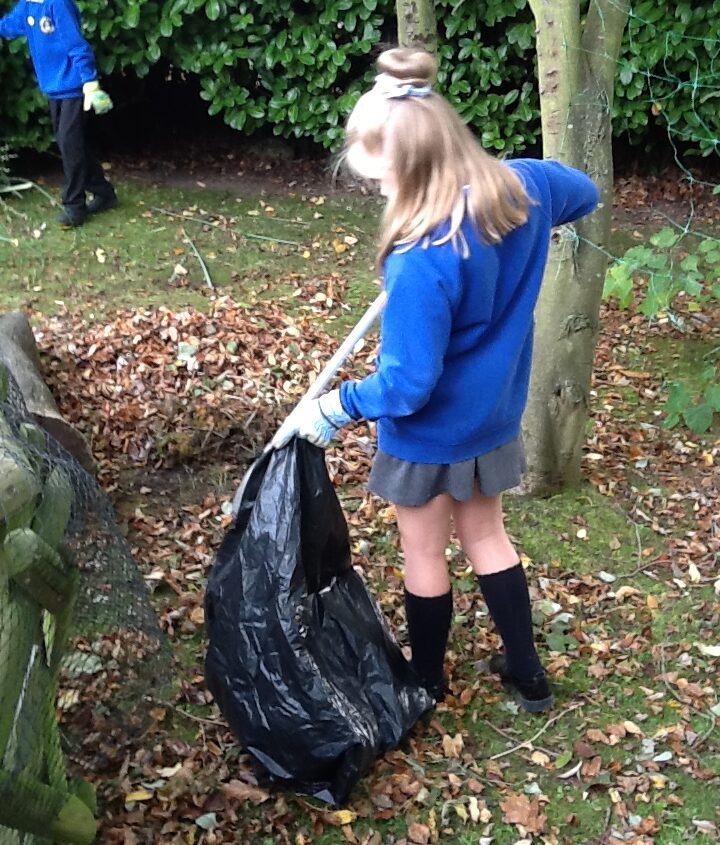
After learning about this they decided they wanted to clean up their school field, which being a public right of way can unfortunately result in fly-tipping and litter. The children planned and carried out a litter pick on the school field, collecting over 15 bags of litter. Year 2 and Year 5 wanted to improve their school grounds so they could have more lessons outside. Many of the children loved learning outside and wanted more lessons to take place outdoors so they discussed how they could improve their forest school area and shared their thoughts with the Teachers. They also decided to purchase some forest school equipment to help them improve the forest school area and make it a lovely and safe place to learn in. They also wanted to increase the diversity of plants and animals that live in and visit their school grounds so they carried out bird, insect and plant surveys, putting their findings into charts.
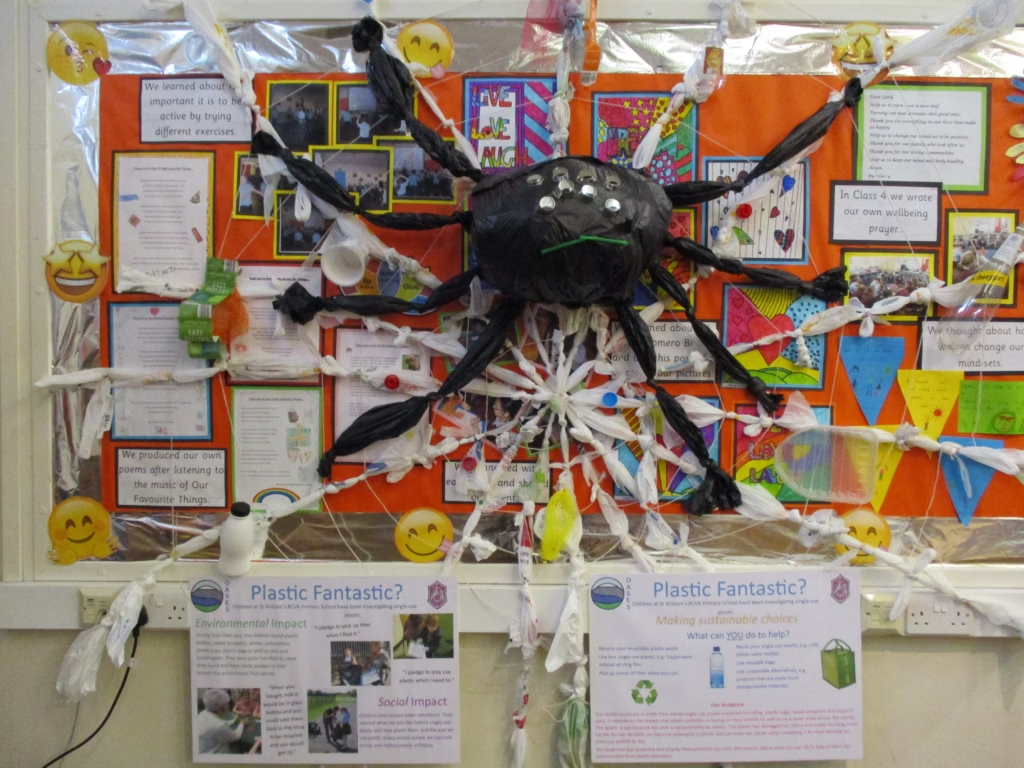
They then created insect and small mammal homes, bird feeders and planted some pollinator friendly plants. In a few months’ time they will carry out follow up surveys to see if their actions have made a difference. Year 1 learnt about marine wildlife and how streams and rivers travel from their local area right to the sea. They learnt about marine wildlife and how plastic is impacting them. The children created posters to encourage more recycling of plastic in the school and created a plan of action to reduce plastic use across the school. They also repurposed plastic items to create marine animals to raise awareness. Despite the project coming to the end, all of the schools are proud of the work they have done to achieve their green flag accreditation. They have all mentioned that they intend to renew their green flag award in two years’ time, where they will each focus on different topics to improve throughout the school.
The work OASES has done with the school, for example, setting up recycling systems, electricity monitors and making physical improvements to the school grounds will last forever. The knowledge OASES has given the lead teachers means that the schools have been empowered to continue the work they are doing for years to come.