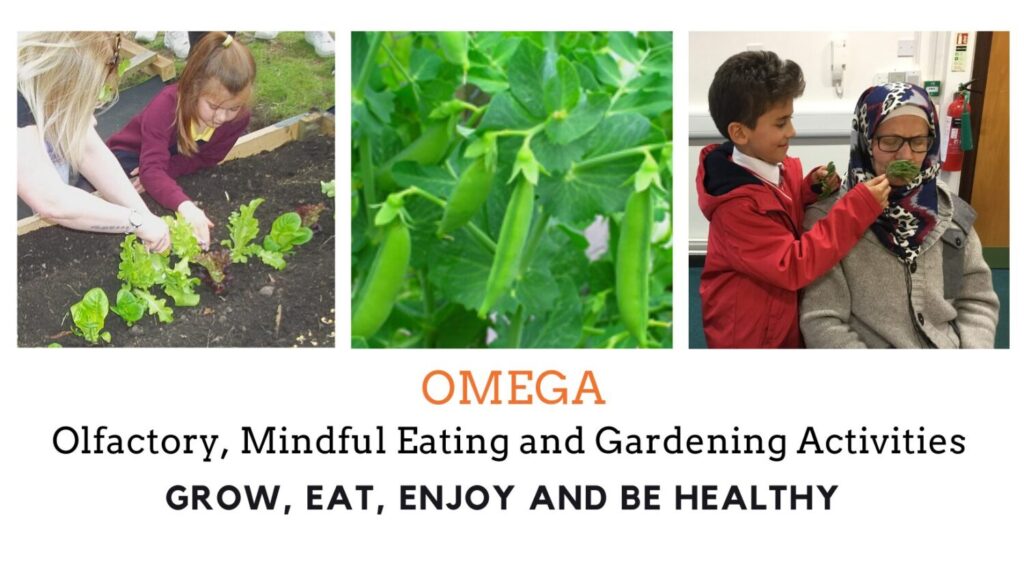
What does OMEGA stand for?
OMEGA stands for Olfactory, Mindful Eating and Gardening Activities.
What is OMEGA all about?
Our sense of smell and taste are closely linked. How we smell affects how we enjoy food! In these Growing theme OMEGA activities your class will explore and develop their sense of smell around the experience of food growing and eating.
Ultra processed food dominates our food supply and diminished our relationship with good healthy food. Lacking in flavour, ultra processed food does not stimulate our senses in the same way as unprocessed food. By reconnecting with our senses and especially our sense of smell we can rekindle our relationship with nutritious food that is healthy.
OMEGA is about encouraging food growing, tasting and eating using the senses to develop a healthy diet and lifestyle.
Resources
OASES have created a range of resources to support individuals, families and teachers to deliver activities that will enhance and develop sense of smell and other senses and encourage trying new foods to improve diet.
Here on these pages you will find resources about how to enhance sense of smell, to explore taste using the senses and to grow your own food.
The Understanding smell and smell training activities are suitable at home and in the classroom.
Teachers
-
Curriculum linked activities to explore food and food growing through the senses
-
The OMEGA learning resources are found on the OMEGA learning resources page.
Individuals and families
-
Activities to explore enhance sense of smell and explore food through the senses
Here is useful online resource for exploring the food and the senses:
https://www.tasteeducation.com
Understanding our sense of smell
Our sense of smell and taste are closely linked. Our appreciation of food is more about smell than taste. The food we eat now is now highly-processed, dominated by food-like substances which have anaesthetised us as food consumers.
OMEGA Goals:
-
to help children become sensory detectives of their own experience
-
to ‘rewild the senses’
-
to (re)awaken awareness and curiosity that sustains on-going interest and interaction with the diversity of food flavours.
We do this by training the sense of smell to increase the range of smells we can recognise and appreciate so enhancing our enjoyment and appreciation of good healthy food.
What is our sense of smell?
Smell is a very complex aspect of anatomy. There are 3-4000 neurons in the brain involved in creating our sense of smell. The brain can distinguish between smells at the molecular level. Essential oils such as spearmint, dill and carraway are almost identical as molecules but our brains can distinguish between them.
Our sense of smell develops through childhood peaking in our twenties and thirties. Smell declines as we advance into old age. Early life experiences are very valuable in developing good preferences for a range of healthy foods over our lifespan.
Smell and the Brain: Smelling is a whole brain activity involving a cascade of brain reactions, emotional processing, visualisation, language and memory stimulation.
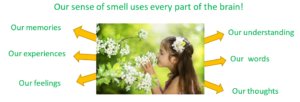
Our brains process the incoming data about the smell and it’s source, what it is, how it makes us feel, how we describe it and what memories it might evoke.
Smell Training
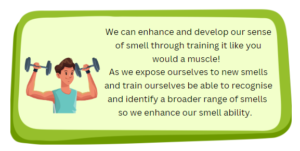
How to train your sense of smell
We can train our sense of smell by regularly smelling new smells. The best results come from regular smell training and creating rich and memorable smell experiences to engage your brain. Smell training can help recover lost sense of smell following an illness such as Covid. But the techniques can also help develop a better sense of smell for everyone!
Factors that limit sense of smell
There are a small percentage of the population who have no or limited sense of smell for various reasons. 4% of children are born with no sense of smell! Other factors that can limit sense of smell either temporarily or in the long term can include pollution, covid and some types of cancer. Autistic children often do not habituate to smells in the same way as other children. Smell training can be less effective in these cases so do not be discouraged if that is you!
Smell Training activities you can try
The Skittles Test – Discover the difference between taste and flavour
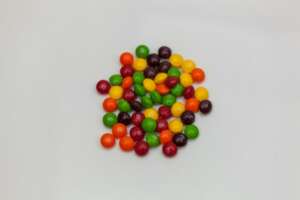

Take a skittle and put it in your mouth. Pinch your nose while you chew so you can’t smell. You can breath through your mouth! What can you taste?
Which taste words describe the taste? salty? sweet? umami? bitter? sour?
Now unpinch your nose and slowly exhale. As you breathe out what do you notice?
You should be able to taste the flavour of the skittle as you breathe out! – Which flavour skittle did you smell? Blackcurrant? Orange? Apple? Lemon?
We taste with our tastebuds in our mouths but we experience flavours as we breathe out through our noses!
Herb garden lucky dip
This is a good starter activity to help you to learn how to distinguish between smells. Choose a selection of garden herbs. Try some bold smells to start with like mint, thyme and rosemary!
Take a sprig of each herb and place it in a tub or bag to sniff. Give the bag a scrunch to release the scents and the take it in turn to give them a smell.
Can you match the herb to the original plant using just your sense of smell? You could make this a blindfold activity and see how gets all three right first time.
Once you have mastered the basics you can expand your range. Keep adding in new smells each week.
Next level garden herb smell training

To really push your smell training you can start to add use different varieties of the same type of herb. There are lots of different varieties of mint, thyme and lavender. Can you learn to distinguish between them using just your sense of smell?
Smell training top techniques – Rabbit sniffing
Rabbit or bunny sniffs are small gentle sniffs to take in a smell. If you breath in a smell too deeply you quickly stop picking up the scents. This is because our noses become habituated to smells and stop picking up new information we don’t need. By taking rabbit sniffs you get the scent as if it was new each time.
Smell training at home
Smell training is often done using essential oils but you can use everyday items. Choose four different distinct smells such as a floral smell from a flower or herb, a citrus fruit, a warm and spicy smell like nutmeg or cloves or vanilla or chocolate and a fresh smell like mint or eucalyptus. Place your items in bowls or similar so you can put your nose in to sniff them.
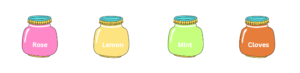
It helps to choose smells you are familiar with as memory and language are important aspects of our sense of smell so you want to build on that existing knowledge.
Start with the first scent and spend a little time taking small gentle rabbit sniffs. Take a moment to appreciate the fragrance, noticing how it makes you feel and any memories it evokes. Note down some words to describe the smell. Is it fresh or herby or fruity or spicy or warm? Look at the item you are smelling and use your hands to touch it and explore the texture. Using all your senses will create a stronger smell memory in your mind.
Then repeat with the other scents. Doing this a few times a week will create strong smells memories. You can then change the scents as you go forwards to build up your smell memory.
Mix and Match Sniffing Game
This is a good game to test your sense of smell! This works well in a family or community session! Choose three or four different scents and place the items in a bowl or tub to sniff. Cover with foil so you can’t see inside and create an opening to sniff from. Create a duplicate copy of the bowls so you have two of each scent. Give each person one tub to be smelled using noses only – no peeking! Can they find the person with the matching scent!
Sensory Scavenger Hunt
Go out into the garden or a local nature spot and see what different items you can find to explore using your senses!
Use our sensory scavenger hunt to engage your senses in the wild! Your least favourite. Find the plant aroma that makes you hungry. That makes you happy. The most familiar. The weirdest. Etc.
Herb garden hunt
Choose and find your favourite smell in the garden. Spend time getting to know the plant. What do the leaves and stems feel like? What is the flower like? What colour, shape and texture words would you use to describe it? See if someone else can find your plant using only the words you use to describe it!
Culinary uses of herb garden plants:
-
Harvest from herb garden and taste simple foods with and without a sprinkling of fresh herb material.
-
Flavour roast or buttered potatoes with different garden herbs.
-
Infuse oil or vinegar with herbs.
-
Start herbs from seeds or cuttings for home use.
-
Compare taste of dried herbs vs fresh, supermarket herbs vs garden
-
Brew tea from herb garden leaves (mint, lemon balm…). Sweeten for kids.
OMEGA teaching resources
Our sense of smell and taste are closely linked. How we smell affects how we enjoy food! Here are some activities you can do with your class to explore food using their senses.
Topics
-
Grow food using your senses
-
Learn about nutrition and food processing
-
Explore food through the senses
Growing food using your senses (KS1 and 2)
In these growing theme OMEGA activities your class will explore and develop their sense of smell around the experience of food growing and eating.
Activities
Food growing through the senses
Engage the children’s senses by exploring smell, taste and touch as they sow and care for your plants. This fosters a care for living things and the environment as the children connect to the plants they are growing.
Choose which vegetables you are going to grow in your plot. When you sow each one plan your session so that you have examples of the final produce, if possible as they would be at harvest. For example you can purchase carrots, radish and beetroot with their carrot tops on in most shops. You can grow pea shoots a few weeks in advance so that the children can taste and smell the foliage. You might be able to buy some pea pods or sugar snaps too for the children to taste. If you have a potato plant already grown ahead of your session you can bring that along for the children to explore.
Touch
Pass round the items of produce and encourage the children to explore textures of the produce and it’s foliage. Share texture words to describe the different textures felt.
Smell
Then smell the produce. Ask simple questions such as do carrot leaves smell like carrots? Chop up some of the produce and pass some slices round to touch and smell. Do the leaves and stems smell the same as the vegetable? What about the seeds? What do they smell like? Carrot seeds actually smell really really strong! What words would you use to describe the smells? There are some helpful ideas of smell adjectives in the link here.
Taste
You may need to get everyone to wash their hands before trying this! Chop up some slices of raw radish, beetroot or carrot, or cut some pea shoots or spinach leaves; and place them in bowls to pass round. You can get baby spinach, kale and beetroot leaves easily in most supermarkets. Encourage the children to taste the produce. If you have taught them to do the Skittles Nose test on the Understanding Smell page then you can encourage the children to hold their noses and then breathe out while tasting to distinguish between taste and flavour.
When you have explored the produce and seeds through the senses you are ready to sow or plant seeds and seedlings into your plot to grow and tend your own vegetables to harvest!
Herb Garden smell training
Why not start a school herb garden so you can encourage the children to explore the different scents and tastes of home grown herb plants? A simple selection of easy to grow herbs could include parsley, mint, thyme and chives. Basil and coriander are easy to use herbs too but are less hardy and may need to be grown indoors or under cover unless it is during the summer.
You can harvest the herbs to allow the children to smell and taste the different scents and flavours. Why not try some of the smell training and taste activities on the Understanding Smell page.
Nutrition and food processing (KS2)
OMEGA aims to encourage healthy eating by using the senses to explore the richness of scents and flavours in the food we eat. Help your class to learn about how food is processed and what ultra processed foods contain. The power point below contains background information as well as a hands on tasting activity to explore the tastes of simple food processes in the food processing taste test.
Exploring food using your senses (KS1 and 2)
Help your class to explore the role of their five senses in this food tasting activity. The power point below takes you through a series of activities that hone in on taste, touch, smell and sound while eating.
Curriculum links
Science: Animals, including Humans (Y3)
-
identify that animals, including humans, need the right types and amount of nutrition, and that they cannot make their own food; they get nutrition from what they eat
Design and Technology: Cooking and nutrition
As part of their work with food, pupils should be taught how to cook and apply the principles of nutrition and healthy eating.
Pupils should be taught to:
Key stage 1
-
use the basic principles of a healthy and varied diet to prepare dishes
-
understand where food comes from.
Key stage 2
-
understand and apply the principles of a healthy and varied diet
-
understand seasonality, and know where and how a variety of ingredients are grown, reared, caught and processed.
English: Spoken Language
-
listen and respond appropriately
-
ask relevant questions
-
develop vocabulary
-
articulate and justify answers, arguments and opinions
-
participate actively in collaborative conversations